By clicking “Accept”, you agree to the storing of cookies on your device to enhance site navigation, analyse site usage, and assist in our marketing efforts. View our Privacy Policy for more information.
Latest research:

Debunking coffee myths: How much of what you see online is actually true?

There are so many videos across social media sharing the purported health benefits and drawbacks of coffee – but how many of these are based on scientific evidence, and how many are actually misinformation?
August 10, 2026

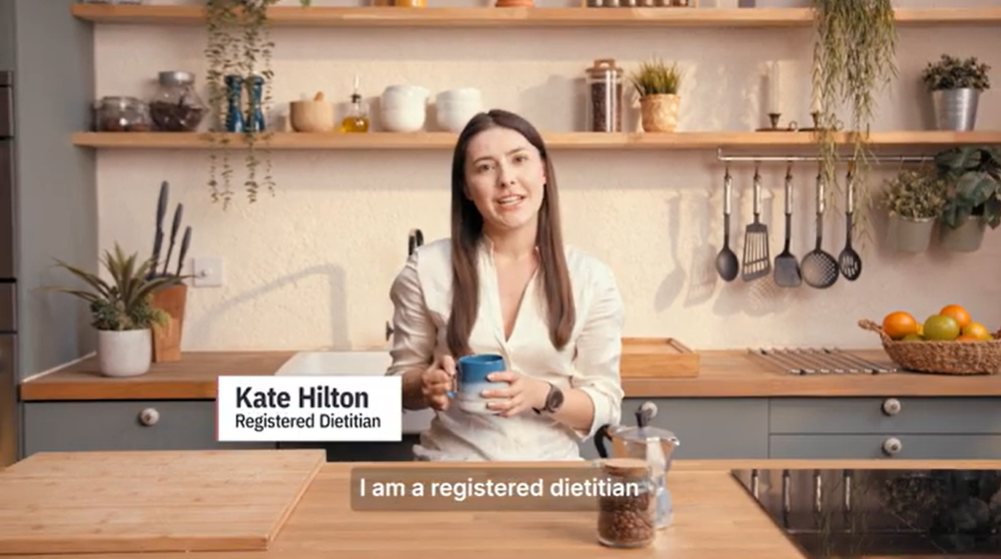
Kate Hilton, registered Dietitian and Head of Nutrition and Dietetics at Diets Debunked, aims to debunk diet myths across social media and provide credible health information that is supported by scientific research:

"There are so many coffee myths on social media. Many of them are based on grains of truth that have been exaggerated or taken out of context, while others are simply not supported by the evidence. From the best time to drink coffee, to its impact on your heart health, digestion and sports performance, it can be difficult for people to separate credible health information from viral trends. That’s why it is so important to look critically at what we see online, check where information is coming from, and rely on qualified health professionals and reputable, science-backed sources when making decisions about diet and health."

Here, Kate shares information on coffee and health that is backed by evidence, and debunks those myths which are in fact, myths.

References

  1. Emadi R.C. (2025) Coffee's Impact on Health andWell-Being, Nutrients,17(15):2558.
  2. Food Standard Agency, PublicHealth England, McCance and Widdowson’s The Composition of Foods,7th, Cambridge, Royal Society of Chemistry, 2014.
  3. HarlandB.F. (2000): Caffeine and nutrition. Nutrition, 7/8:522-526.
  4. Williamson,G. (2017), The role of polyphenols in modern nutrition. Nutr Bull, 42:226-235. 
  5. Henn M. et al. (2023) Changes in CoffeeIntake, Added Sugar and Long-Term Weight Gain - Results from Three LargeProspective US Cohort Studies. Am J Clin Nutr, 118(6):1164-1171. doi:10.1016/j.ajcnut.2023.09.023.
  6. DiMaso M. et al. (2021) Caffeinated Coffee Consumption and Health Outcomes in theUS Population: A Dose–Response Meta-Analysis and Estimation of Disease Casesand Deaths Avoided, Adv Nutr, 12(4):1160-1176
  7. Poole R. et al. 2017), Coffee consumption andhealth: umbrella review of meta-analyses of multiple health outcomes. BMJ,359:j5024.
  8. Tajik N. et al. (2017). The potentialeffects of chlorogenic acid, the main phenolic compounds in coffee, on health:a comprehensive review of the literature. Eur J Nutr, 7:2215-44.
  9. HoelzlC, et al. (2010). Instant coffee with high chlorogenic acid levels protectshumans against oxidative damage of macromolecules. Mol Nutr Fd Res,54(12):1722-33.
  10. NehligA. (2018) Interindividual Differences in Caffeine Metabolism and FactorsDriving Caffeine Consumption. Pharmacol Rev,70(2):384-411.
  11. Clark I. and Landolt H.P.(2016): Coffee, Caffeine, and Sleep: A systematic review of epidemiologicalstudies and randomized controlled trials. Sleep Med Rev, 31:70-78.
  12. Gardiner C.L. et al.(2025) Dose and timing effects of caffeine on subsequent sleep: a randomizedclinical crossover trial. Sleep, 11;48(4):zsae230.
  13. Ogeil R.P., Phillips J.G.(2015) Commonly used stimulants: Sleep problems, dependence and psychologicaldistress. Drug & Alc Dep, 153:145-51.
  14. European Food Safety Authority (EFSA). (2011). FSA Panel onDietetic Products, Nutrition and Allergies (NDA): Scientific Opinion on thesubstantiation of health claims related to caffeine and increased fat oxidationleading to a reduction in body fat mass (ID 735, 1484), increased energyexpenditure leading to a reduction in body weight (ID 1487), increasedalertness (ID 736, 1101, 1187, 1485, 1491, 2063, 2103) and increased attention(ID 736, 1485, 1491, 2375) pursuant to Article 13(1) of Regulation (EC) No1924/20061. EFSA Journal, 9(4):2054.
  15. Soderholm S. et al. (2026) Habitual coffee consumptionpoorly correlates with sleep quality and daytime sleepiness: A cross-sectionalstudy. PLoS One, 21(3): e0344479.
  16. Yang A.,Palmer A.A., de Wit H. (2010) Genetics of caffeine consumption and responses tocaffeine. Psychopharmacology, 211(3):245-57.
  17. O’KeefeJ.H. et al. (2018) Coffee for Cardioprotection and Longevity. ProgCardiovasc Dis, 61(1):38-42.
  18. SimonJ. et al. (2022) Light to moderate coffee consumption is associated with lowerrisk of death: a UK Biobank study. Eur J Prev Cardiol, 29(6):982-991.
  19. Chieng D. et al. (2022) Effects of habitual coffeeconsumption on incident cardiovascular disease, arrhythmia, and mortality:findings from UK biobank. J Am Coll Cardiol, 79(9):1455.
  20. Carlström M., Larsson S.C. (2018) Coffee consumption andreduced risk of developing type 2 diabetes: a systematic review withmeta-analysis. Nutrition Reviews, 1093/nutrit/nuy014.
  21. Ding M. et al.  (2014) Caffeinated and decaffeinated coffeeconsumption and risk of type 2 diabetes: a systematic review and adose-response meta-analysis. Diabetes Care. 37(2):569-86.
  22. JiangX. et al. (2014). Coffee and caffeine intake and incidence of type 2 diabetesmellitus: a meta-analysis of prospective studies. EJCN.53(1):25-38.
  23. Zhang Y. et al. (2025) Decaffeinatedcoffee consumption and risk of total and site-specific cancer. Ann Oncol.36(7):819-831.
  24. Gunter M.J. et al. (2017) Coffee Drinking andMortality in 10 European Countries: A Multinational Cohort Study. Ann InternMed. 2017 Aug 15;167(4):236-247.
  25. Nehlig A. (2022) Effects of Coffee on the Gastro-IntestinalTract: A Narrative Review and Literature Update. Nutrients, 14(2):399.
There are currently no related campaigns. Visit our information campaigns page for more.